Cameras that think.
Ordinary cameras record what happened. Ours understand what is happening.
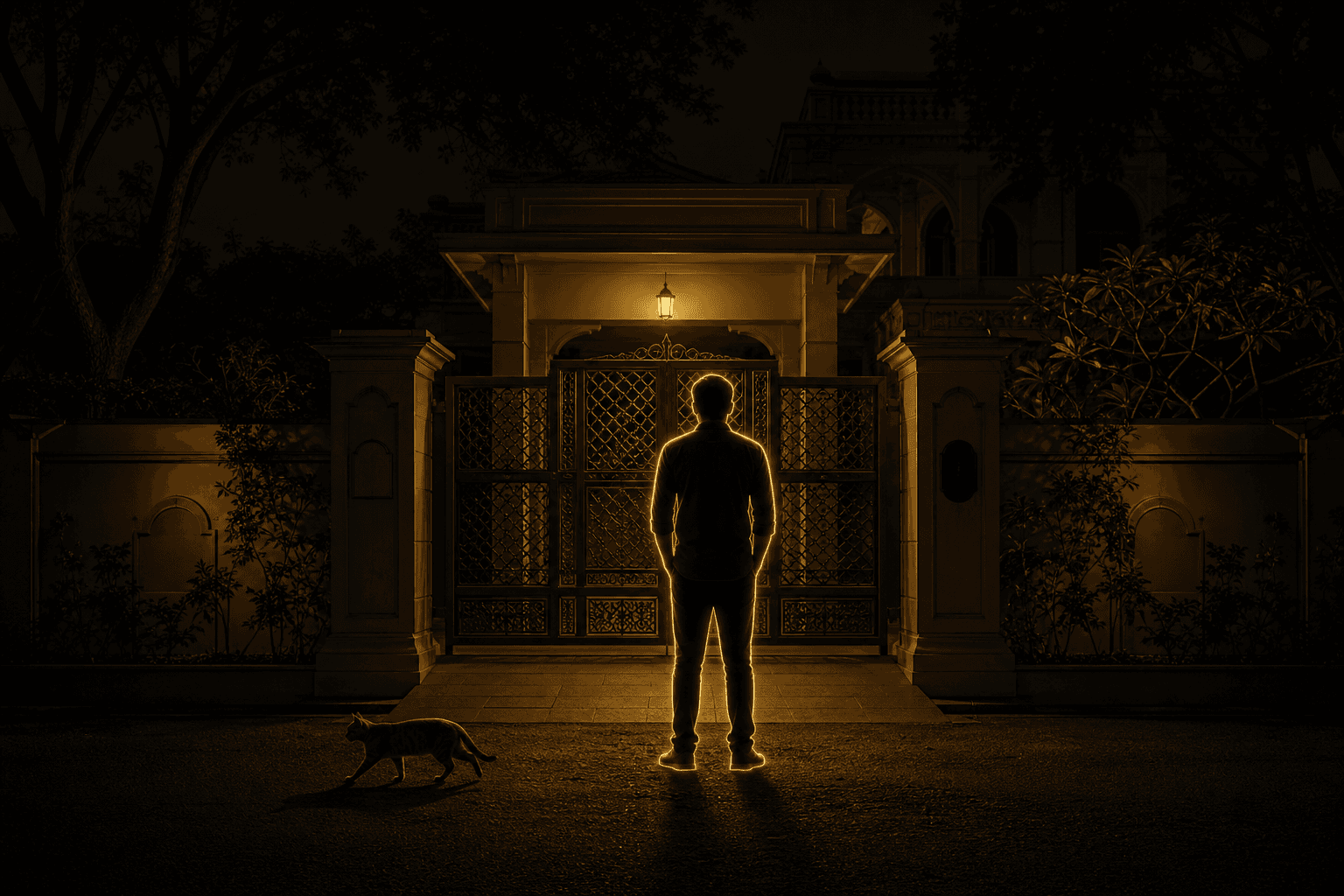
A person at your gate at 2am matters. A passing cat does not. The camera knows the difference, so your phone only rings when it should.
A recording is evidence. A detection is time.
Most homes already have cameras. They work exactly as designed: they record. When something happens, you get footage of it happening, discovered the next morning, scrubbed through at eight-times speed, handed to the police as a file. The camera did its job. It just did it for afterwards.
An ordinary camera gives you evidence for afterwards. Ours gives you time during. The difference is not the lens or the resolution. It is whether anything is actually watching, at the moment it matters, with the authority to act.
A camera that only records is a witness. You need a lookout.
From site walk to standing watch.
The same discipline behind 7,000+ gate automations and 400+ smart homes since 2019, applied to how a home should be watched.
Walk the boundary
We walk your compound the way an intruder would. The gate, the wall, the dark run behind the cars, the terrace ladder nobody thinks about. Every camera gets a written purpose and a field of view, and nothing points where it should not, not into a bathroom window, not into the neighbour’s bedroom.
Wire it properly
Every camera runs on its own wired PoE line back to the rack, on the same wired backbone the rest of the home rides. No WiFi cameras that drop when the microwave runs, no adapters tucked behind curtains. The recorder sits on protected power, so a flicker in the mains does not blind the house.
Teach it the property
Detection is commissioned on hardware inside your home, then tuned to it. We draw the zones on each frame: the gate approach, the wall line, the driveway. Person, vehicle and animal rules are set per zone, per hour, so the system learns what your normal looks like before it ever rings your phone.
Wire it into the one mind
A detection is not a dead-end clip. It becomes an event the house can act on: the gate holds, the perimeter lights rise, the live view lands on your phone, and Iniyal can tell you what she saw. The cameras stop being a separate system and become the eyes of the home.
Watchful, not noisy.
AI detection
Person, vehicle or animal, told apart in the frame itself. The alert says who, not just that something moved.
Gate + perimeter
The gate, the compound wall, the blind corner behind the cars. Watched as one continuous line, not scattered views.
Local processing
Detections happen on hardware inside your home. No cloud round-trip deciding whether your night matters.
Private by design
Footage stays in your home, on your storage. Nothing leaves unless you choose to send it.
Engineered, documented, yours.
A camera system is not a box of lenses. It is a set of decisions, and you get every one of them in writing.
The coverage plan
A drawing of every camera, its field of view and its written purpose. You know exactly what is watched, and what deliberately is not.
Wired PoE runs
Each camera on its own cable back to the rack, labelled at both ends. No WiFi dropouts, no power adapters hidden behind furniture.
The recorder in your rack
Local storage sized for your retention, sitting on protected power inside the house. Your footage never needs a subscription to exist.
Zones, tuned on site
Detection zones drawn and tested on your actual frames, not factory defaults. The gate approach and the wall line each get their own rules.
Alert rules that respect you
Who gets told, about what, at which hours. A person at the gate rings at 2am. Everything else waits politely for morning.
A privacy walkthrough
We sit with you and show what stays local, what can leave, and how to see and revoke it. The choices are yours, made visible.
The cameras feed the same one mind that runs the rest of the house.
A detection is not a dead-end notification. The gate can hold, the perimeter lights can rise, and Iniyal can tell you exactly what she saw.
Meet the AIoT layerWhat a lookout feels like.
23:12You say goodnight. The house sweeps itself, and the cameras shift to their night rules: the gate approach and the wall line go sharp, the driveway relaxes, the porch keeps half an eye open.
02:14A person stops at the gate. Not wind, not headlights, a person. The gate holds its lock, the perimeter lights rise from nothing to full, and your phone rings once with three words: Person, Gate, live view attached.
02:15You watch him look up into the light, think better of it, and walk back toward the road. Iniyal tells you what she saw: one person, forty seconds at the gate, no contact with the latch, gone. You put the phone down and sleep.
02:47A cat crosses the compound wall, the way it does most nights. The system logs it and lets it pass. Nobody wakes. That silence is engineered too.
07:30Over coffee, the night is a short list: one person turned away, one cat ignored. The clip sits on your own storage, inside your own house. It never went anywhere, because it never needed to.
Eyes are only part of it.
The cameras do their best work when the rest of the house is built to listen.
Asked, answered.
01Do the cameras need the internet to work?
No. Detection runs on hardware inside your home, and footage is written to storage inside your home. If the broadband drops, the cameras keep watching, detections keep firing, and the house keeps reacting. Internet is only needed for remote viewing and for alerts to reach your phone when you are away.
02Where does my footage actually go?
Onto storage that sits in your own rack, inside your house. There is no cloud dependency for detection and no subscription that holds your recordings hostage. Nothing leaves the house unless you choose to send it: a clip you share, or remote access you switch on and can revoke at any time.
03Will it flood my phone with alerts?
No, that is the point. The camera tells a person from a vehicle from an animal in the frame itself, and each zone carries its own rules and hours. A person at the gate at 2am rings your phone. A cat crossing the compound wall at the same hour is logged and ignored.
04Can the cameras trigger the rest of the house?
Yes. In an Onwords home they feed the same one mind that runs the gate, lights and security. A confirmed person at the perimeter can hold the gate, raise the perimeter lights and bring the live view to your phone. Iniyal can then tell you exactly what she saw.
05Can you add AI cameras to a house you did not build?
Usually, yes. We start with a site audit: what cabling exists, where the blind spots are, whether the network can carry the streams. Some existing cameras can stay on as plain eyes, but the intelligence runs on our local hardware. You get a clear plan before any work begins.
06What new detections are coming?
Advanced detection intelligence is rolling out across Living Homes in stages, on the same local hardware. Homes we wire today are built to receive these capabilities as software, without replacing cameras or cabling. Your system gets sharper over time instead of ageing out with its firmware.
Eyes that understand your home.
Tell us about your gate and grounds, and we will design the coverage, the detections and the privacy around them.