Light, designed.
Anyone can fit a light. We compose it. Ambient, task and accent, layered so every room flatters the hour.
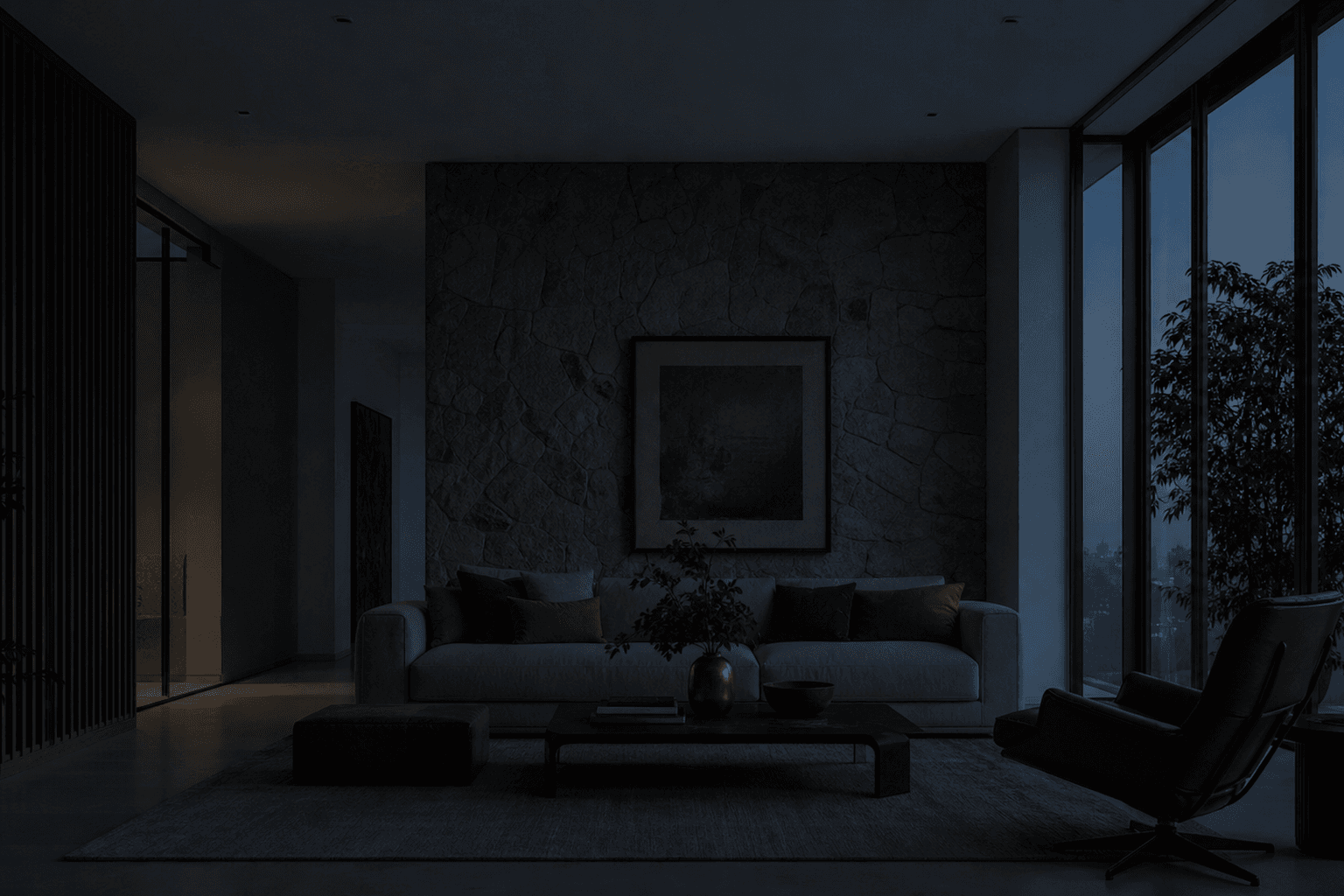
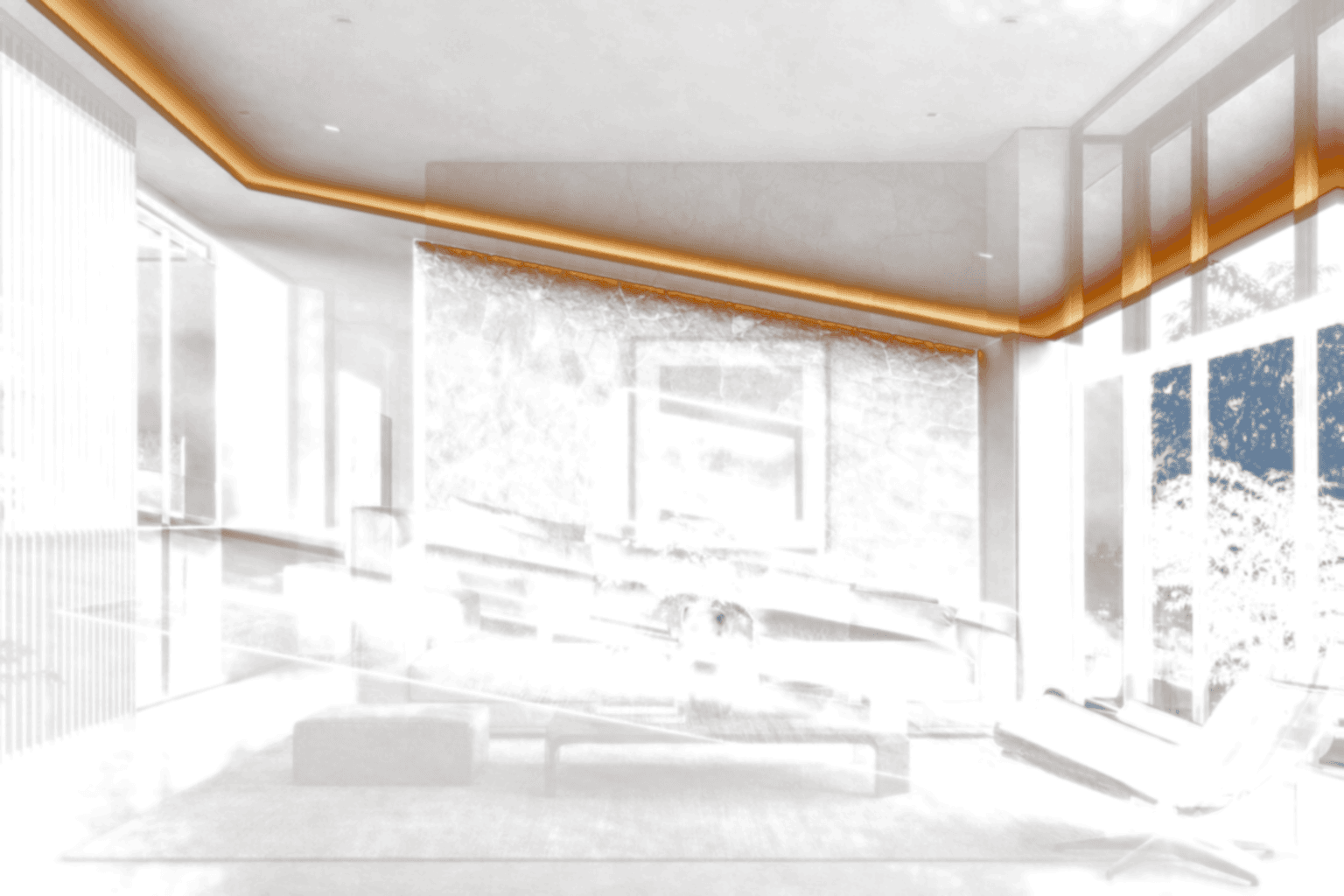

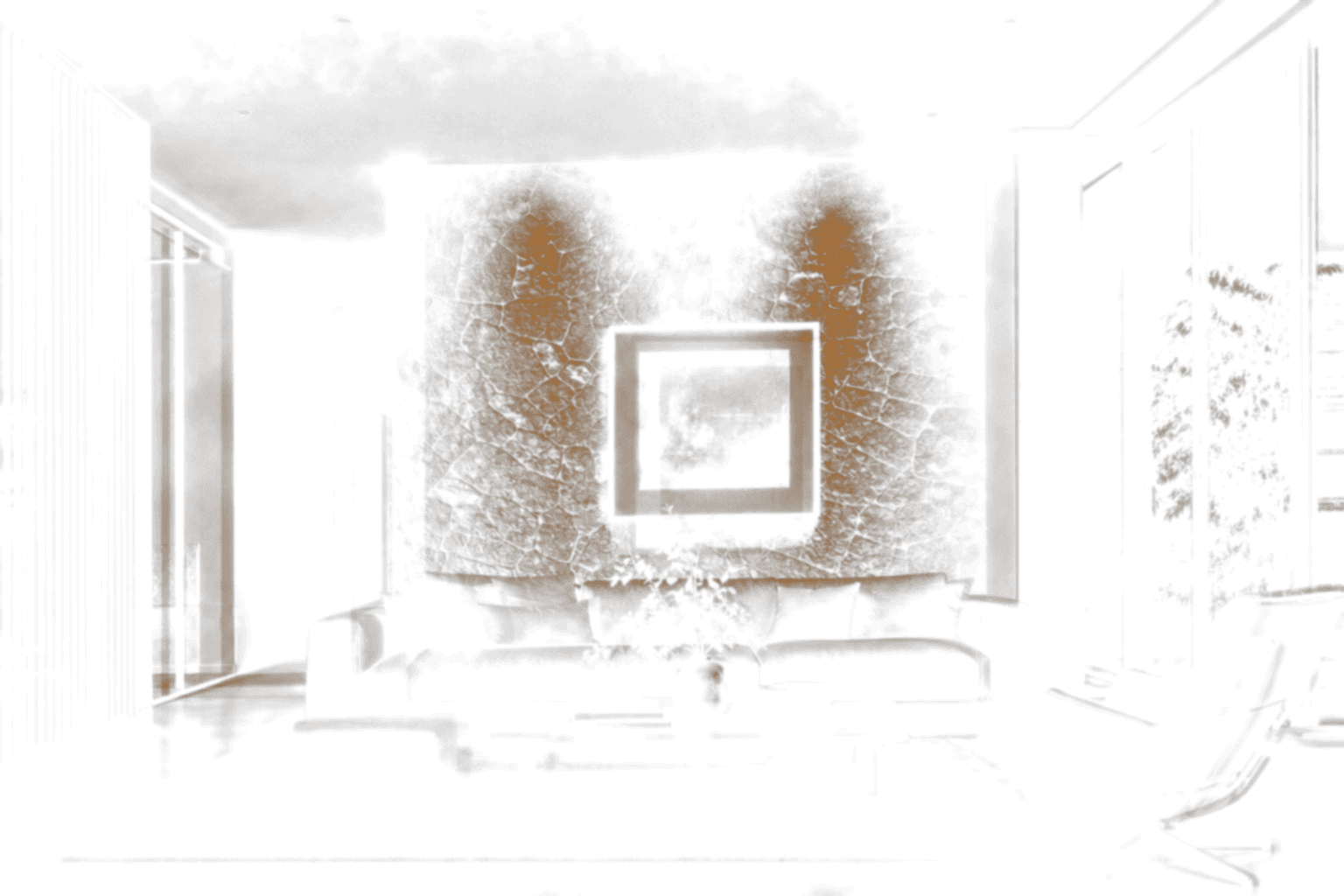
Tap each layer to build the room up, the way we compose it on site.
A grid of downlights is not a design.
Most homes get their light the same way: a contractor spaces downlights across a ceiling grid, one white, one brightness, one switch per room. The room passes inspection at noon and fails every evening after. Dinner glares like a clinic. The TV fights a ceiling spot. Nothing in the room has depth, because everything in the room is lit the same.
Light is not a fitting count. It is a composition.
Three layers, one feeling.
A well lit room is never one light doing everything. It is three, tuned against each other.
Ambient
The soft, even wash a room sits in. The base note the eye never argues with.
Task
Light exactly where hands and eyes work. The kitchen counter, the reading chair, the desk.
Accent
The deliberate highlights. A textured wall, a painting, an alcove, the depth in a room.
The same room, tuned to the hour.
The three layers are the vocabulary. Composition is what you do with them across a day. Tunable white moves the colour of the room with the sun: cooler, crisper light while the house is working at noon, a warm shift as dusk settles, so that evening at home actually feels like evening.
And a scene is not lights switching. It is lights travelling a dimming curve: the dinner scene eases the ambient down while the table warms up, over seconds, so the room changes mood without anyone noticing the mechanics. That is the difference between installing fixtures and composing light.
From plan to the first lit evening.
The same discipline whether we join at the drawings or after the furniture has arrived.
Read the rooms
We start with the plans and with how you actually live: where you read, where you eat, which wall deserves attention. On a finished home, we read the ceilings and circuits as they stand.
Compose the layers
Room by room, ambient, task and accent are drawn together with partner architects and lighting engineers with more than twenty years of practice. Light is designed with the structure, not sprinkled on after.
Engineer the control
Dimming and control run on DALI and on KNX, the ISO/IEC 14543 building-control standard. Fixtures are addressed individually, so dimming is smooth, silent and flicker-free right down the curve.
Tune on site
Handover is an evening, not an email. We stand in each finished room with you, set the scenes, walk the tunable white arc through the day, and adjust until the room feels right, not just reads right.
What a lighting design includes.
A composition you can build, control and live with, documented end to end.
The room-by-room plan
Every fixture positioned, aimed and layered on drawings your architect and electrician can build from.
The fixture schedule
Hand picked from vendors we have worked with and trust. What is drawn is what arrives on site, no mystery hardware.
DALI and KNX control
Digitally addressed dimming on an open standard, KNX (ISO/IEC 14543), flicker-free from full brightness down to a whisper.
The tunable white arc
A programmed colour-temperature day: cool focus at noon, warm ease at dusk, set for how your family lives.
The scene set
Morning, dinner, movie, night. Authored with you at handover, each one a balance of layers with its own dimming curve.
Tuning and documentation
An evening of on-site tuning in the finished rooms, then documentation, so the design survives lamp changes and repaints.
Drawn by people who do this for a living.
Partner architects
Designed alongside architects who shape the space, so light and structure are drawn together.
20+ years of practice
Lighting engineers with more than two decades of built work, not a catalogue and a guess.
Fixtures we trust
Every fixture hand picked from vendors we have worked with for years. No mystery hardware.
A day of light, unattended.
12:30The kitchen works under cool, crisp white. Counters bright, shadows nowhere, the whole house in focus mode without anyone having chosen it.
18:20Dusk. The house begins its warm shift, so gently nobody could name the minute it happened. The textured wall in the living room comes forward as the daylight leaves it.
20:05Dinner is called. The table brightens under its task light while the room around it steps back down the curve. Faces look like they do by candlelight, not in a canteen.
23:15Goodnight. Night trails only: a low, warm path from bedroom to kitchen. Bright enough to walk by at 2 am, dim enough to walk back into sleep.
Light works better with company.
The composition is one layer of the home. These are its neighbours.
Asked, answered.
01What do ambient, task and accent actually mean?
Ambient is the soft, even wash the room sits in, the base level. Task is light aimed exactly where hands and eyes work: the counter, the desk, the reading chair. Accent is the deliberate highlight: a textured wall, a painting, an alcove. A room feels composed when all three are tuned against each other, not when one fixture does everything.
02What is tunable white?
The same fixture shifting its colour temperature through the day: cooler, crisper light for focus around noon, warmer light as the evening settles. We program that arc into the home so rooms follow the hour on their own. It is the difference between a room that is merely lit and a room that feels right at 8 am and at 8 pm.
03Why do you insist on DALI and KNX for dimming?
Ordinary phase dimmers flicker, buzz and fall apart at low levels. DALI addresses each fixture digitally, so dimming stays smooth and silent right down the curve. KNX is the ISO/IEC 14543 building-control standard, so the control layer is an open standard rather than one brand's app. Together they make every scene repeatable and flicker-free.
04Who draws the design?
Our team composes it alongside partner architects and lighting engineers with more than twenty years of practice. The light is drawn with the structure, not after it. Fixtures are hand picked from vendors we have worked with and trust, so what is on the drawing is what arrives on site.
05Can this be done in a finished home, or only on plans?
Both. On plans, we draw the layers with the architect before the first conduit is cast. In a finished home, we compose within what the ceilings and circuits allow, and it is remarkable how far scenes, dimming and tunable white go even without civil work. Bring the drawings, or bring the house.
06Do I have to drive all of this myself?
No. Scenes are authored with you at handover: morning, dinner, movie, night. The home then moves through its arc on its own, and any switch or the app overrides it instantly. Automation carries the routine, and you always keep the veto. Most families stop thinking about their lights within a week, which is the goal.
Let us compose your rooms.
Bring us the plans, or the home as it stands. We will design the light layer by layer, and automate it so it flatters every hour on its own.