Smart Lighting Design and Scenes: How Good Light Changes a Home
Lighting is the fastest way to change how a home feels, and most homes waste it on a single harsh switch. Smart lighting design layers light for what you are actually doing, and scenes let one tap turn a room from bright and working to warm and calm. Done well, it is the feature people fall in love with first.
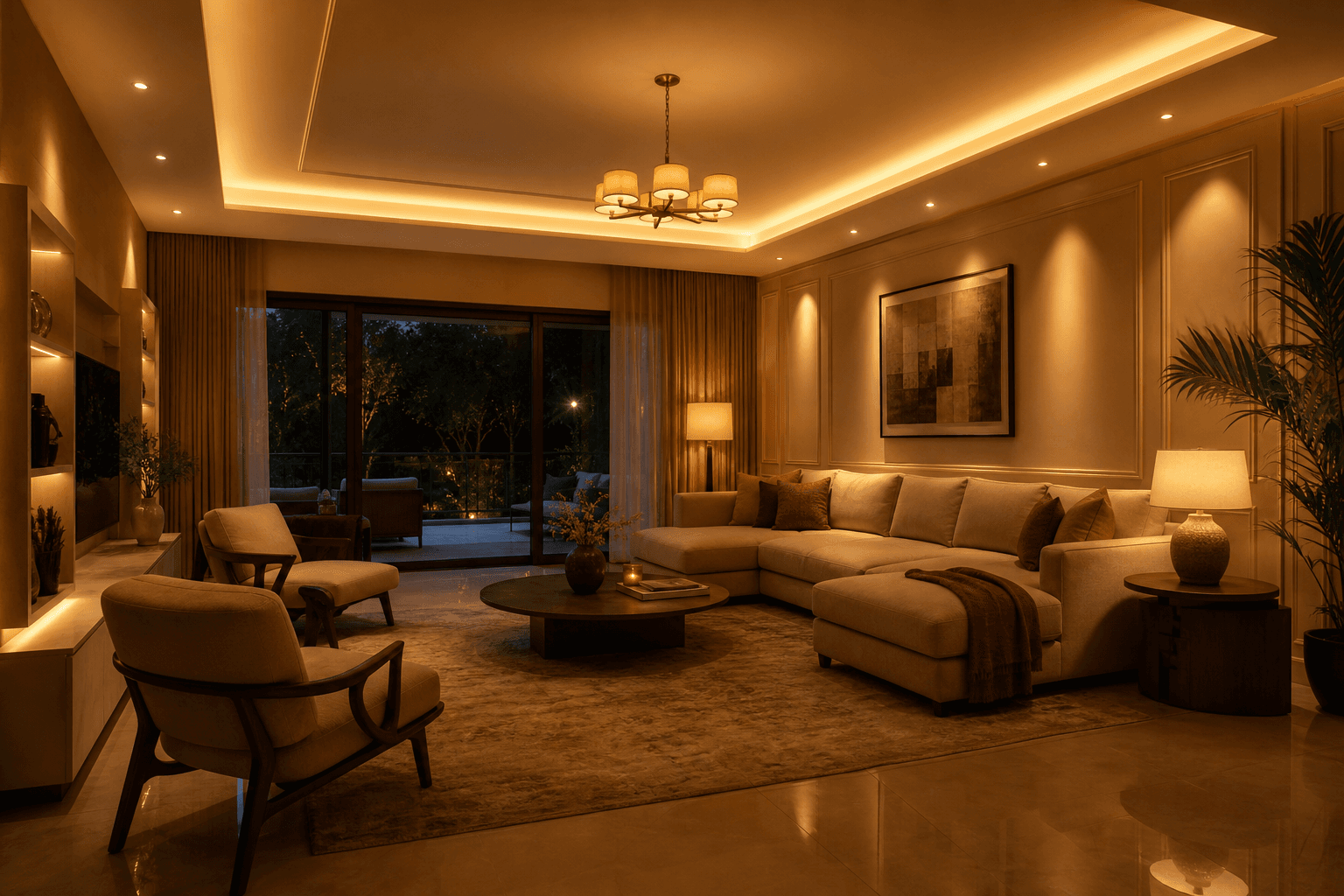
Light shapes how a home feels
Walk into a room and before you notice the furniture or the paint, you feel the light. It is the fastest thing in a home to change the mood, and it is the thing most homes waste. The usual setup is a single bright tube or panel on the ceiling, on one switch, flooding everything at the same harsh level whether you are cooking, reading, hosting, or trying to wind down. That one flat light cannot do all of those jobs, so the room never quite feels right. Smart lighting design starts by treating light as something you shape for the moment, not a single switch you flick on and leave.
The three layers of light
Good lighting is built in layers, and each one does a different job. Ambient light is the soft, general glow that fills the room and sets the base. Task light is focused where you actually do things, the kitchen counter, the reading chair, the study desk, so you are not straining under a dim ceiling. Accent light is the finishing touch, a quiet wash on a painting, a plant, or a textured wall, the part that makes a room feel designed rather than just lit. Most homes have only the first layer, and a harsh version of it. Bring all three together, each on its own dimmable control, and an ordinary room starts to feel considered.
General light that sets the base level of the whole room.
Focused light on the counter, the desk, the reading chair.
A quiet wash on art, a plant, or a textured wall.
One layer is a lit room. Three layers is a designed one.
Scenes: one tap for the moment
A scene is the whole look of a room saved and recalled with a single tap. Instead of walking around adjusting five different lights by hand, you set them once for the way you actually live, then trigger the entire mood in a moment. Dinner brings the table light down to a warm low and softens everything around it. Movie drops the room to a whisper so the screen carries the evening. Welcome throws a bright, warm wash the moment you walk in with your hands full. Goodnight fades the house to a last low glow before it settles into dark. One tap takes a room from bright and working to warm and calm.
Warm and low over the table, everything around it softened.
The room drops to a whisper so the screen carries the evening.
A bright, warm wash the moment you walk in with your hands full.
A last low glow, then the house settles into the dark.
The same lights, four different rooms, chosen in a single tap.
Light that follows the day and your routine
The best lighting is the kind you stop thinking about, because it keeps pace with you on its own. It can be cool and bright through the working hours, then drift warmer and softer as the evening comes, without anyone touching a switch. It can wake a room gently in the morning, ease down after sunset, and settle into a low, calm light late at night. It can notice an empty room and switch off, or lean on daylight when there is already enough coming through the windows. The home simply keeps time with the day and with your habits.
A gentle, cool wake-up as the day begins.
Cool and bright to keep you sharp.
Warmer and softer as the light drops.
A low, calm glow before the house rests.
Good lighting saves energy too
Layered, scene-based light is not only about mood, it quietly saves energy. The whole idea is the right light only where it is needed, so you are not running a full ceiling at maximum for one small task at the counter. Lights dim when full brightness is not needed, switch off in rooms nobody is in, and step back when daylight is already doing the work. On any single evening the saving is small. Over a year of evenings, it is the kind of quiet discipline that shows up on the bill. If cutting the running cost of the home is the goal, our guide to smart home energy savings goes deeper.
How Onwords designs lighting and scenes
We do not hand you a box of bulbs and wish you luck. We start with how you live in each room, then design the layers, the scenes, and the controls around that. In a new home or a renovation we plan the wiring early for the cleanest result. In a home you already live in, wireless modules fit behind your existing switch boards, so you get layered light and scenes without tearing the place apart. Everything is set so the light just does the right thing, from a wall switch, a panel, your voice, or on its own, and nobody in the family has to reach for an app. The same thinking runs through the rest of what we build, from home theatre automation to whole home scenes across everything we build.
- Layers designed around how you use each room
- Everyday scenes: dinner, movie, welcome, goodnight
- Automation that follows the day and your routine
- Wall switch, panel, or voice, not app-only
How to design smart lighting scenes for your home
Four steps, in order, and they work the same for a new build or a home you already live in.
- 01
Map each room by what you do there
Walk through the home room by room and note what actually happens in each one, cooking, reading, watching, hosting, sleeping. The activities, not the fittings, decide where the light needs to go.
- 02
Layer the light: ambient, task, and accent
For each room plan three layers, soft ambient light to fill the space, focused task light where you do things, and accent light to pick out what deserves attention. Each layer gets its own dimmable control so it can be set on its own.
- 03
Group the layers into scenes
Combine the layers into a handful of everyday scenes, dinner, movie, welcome, and goodnight. Each scene sets every light to the right level at once, so one tap changes the whole mood of the room.
- 04
Add automation and simple controls
Let the light follow the day and your routine, warmer and softer in the evening, low and calm at night, and give it easy controls, a wall switch, a panel, or voice, so nobody has to hunt for an app.
FAQ
Smart lighting design is planning the light in a home around what people actually do in each room, then making it simple to control. Instead of one bright ceiling light on a single switch, you layer different lights and group them into scenes you set with one tap. Done well, it changes how a home feels, room by room, without anyone having to think about which switch does what.