The Home That Learns Your Routine: AI Pattern Matching in Onwords Living Homes
The best automation is the one you did not have to set up. Onwords Living Homes learn how you actually live. Over a week or two, the home quietly notices the small routines you repeat, the light you switch off around the same time each night, the rooms you use and when, and then it offers to handle them for you. It only ever suggests. Nothing changes in your home until you say yes.
Why fixed automations fall short
Rules you set by hand are rigid, and they get stale as life changes. You program a light to come on at seven, and then the season shifts, the kids start school, or work hours move, and the rule is suddenly wrong. Real homes have rhythms, and those rhythms move with the seasons, with work, and with family. Automation should learn those rhythms rather than force you to sit down and program them, and reprogram them every time life moves on.
How an Onwords home learns
It pays attention to two simple truths. First, the actions you repeat at roughly the same time on most days, your daily habits. Second, the way each room usually looks at a given time of day, its normal picture. From enough real days, both of these become patterns the home can recognise, steady signals that stand apart from the random one-off things you do once and never again.
The actions you repeat at roughly the same time on most days.
The way a room usually looks at a given time of day.
It suggests, you decide
Once the home spots a steady pattern, it offers an automation or a gentle reminder in the app. You approve the ones you like and ignore the rest. It is your home, so it asks first, every time. This is the part that matters most, so it is worth being plain about it. The learning is suggest first, and nothing in your home changes until you say yes.
Suggest first, always. The home proposes, you approve, and only then does anything take effect.
It learns your home, not a template
Because it learns from your actual days, the suggestions fit your family, not an average household. A home used mostly in the evenings learns evenings. A weekday routine that differs from your weekends is learned as two routines, not smoothed into one blurry average that fits nobody. The home you get is shaped by how you live in it, not by a preset that shipped in the box.
Weekdays and weekends that differ are kept as two separate routines.
It gets better the longer you live in it
The more real days it sees, the sharper and more useful its suggestions become. Your home grows into your routine over time, quietly, in the background, without asking you to configure anything. There is no big setup day and no perfect first week to aim for. You simply live in the home, and it keeps learning as you go.
How the learning works
Four steps, in order. It watches, it finds your patterns, it suggests and waits for your approval, and it keeps improving the longer you live in the home.
And round again, learning a little more from every real day
It spotted a steady pattern and offers to handle it for you, as a suggestion in the Living Home app.
It only takes effect once you say yes. Ignore the ones you do not want, and nothing changes.
The home never changes anything on its own. It asks first, every time.
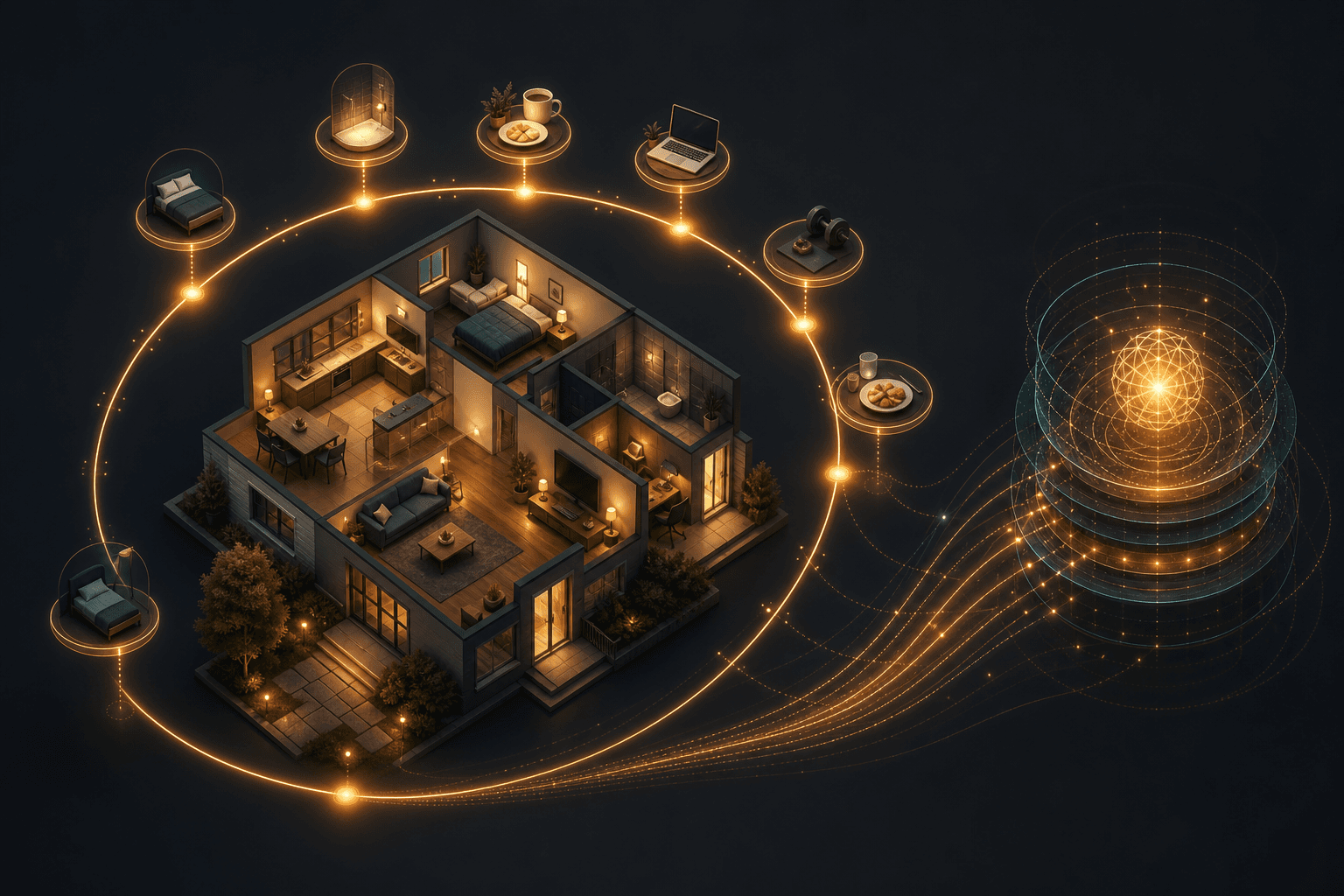
How an Onwords Living Home learns your routine
Four steps, in order, over about one to two weeks of normal living.
- 01
It watches how you live
As you use your home normally, it quietly notes the actions you repeat and how each room usually looks at a given time of day.
- 02
It finds your patterns
Over about one to two weeks of real days, the steady routines rise to the surface as patterns, while random one-off actions are ignored.
- 03
It suggests, you approve
When it spots a steady pattern, the home offers an automation or reminder in the Living Home app, and it only takes effect if you approve it.
- 04
It keeps improving
The longer you live in the home, the more real days it learns from, so its suggestions get sharper and more useful over time.
Part of the Onwords Living AI
This learning is one piece of the intelligence built into every Onwords Living Home, alongside noticing when something is off and keeping itself healthy. The same home that learns your routine also watches for the unusual and looks after its own upkeep, so the whole system quietly works in your favour.
How an Onwords home notices the unusual and flags it for you.
The intelligence that keeps the whole home working as one.
The step beyond a smart home, and how India gets there.
If you want a home that learns you, you can explore what we build across our products or get a smart home quote and we will design an Onwords Living Home around your routine.
FAQ
An Onwords Living Home quietly notices the actions you repeat at similar times and how your rooms usually look through the day. From enough real days it forms patterns, then offers to handle those routines for you.